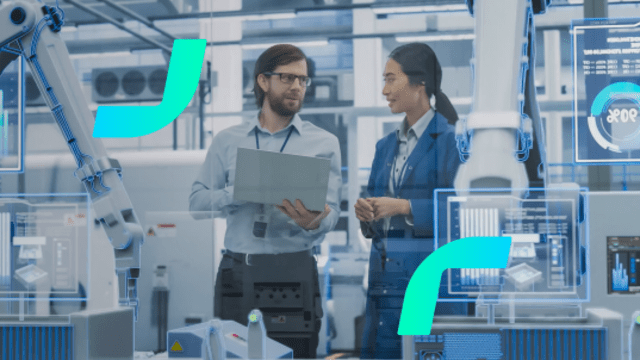
Agentic AI in manufacturing: Key uses, capabilities and benefits
Agentic Artificial Intelligence (AI) is changing how businesses approach automation and decision-making. Unlike traditional AI systems, Agentic AI can plan tasks, make decisions and take actions towards specific goals. It can also adapt its approach when conditions change.
For the manufacturing industry, this technology offers opportunities to improve shopfloor operations, coordinate workflows and respond to production challenges. Agentic AI in manufacturing could help companies make faster decisions, reduce repetitive work and improve operational efficiency.
What is Agentic AI?
Agentic AI refers to AI systems that can work towards goals with a degree of autonomy. These systems can interpret information, reason about possible actions and carry out tasks with limited human intervention.
Many Agentic AI systems use Large Language Models (LLMs) to understand instructions and coordinate actions. They may also connect with business software, production systems, sensors and other digital tools.
Traditional AI often performs a specific task, such as identifying a defect or forecasting demand. An agentic system can go further by coordinating several steps towards a wider objective.
For example, a manufacturing agent could detect a production delay, review machine data, check material availability and recommend a revised schedule. Depending on its permissions and system integration, it may also initiate approved actions.
Human oversight remains important, particularly when decisions affect worker safety, product quality or expensive equipment.
Core capabilities of Agentic AI systems
Agentic AI systems typically rely on three key capabilities: autonomy, collaboration and adaptability. Together, these features help them manage complex tasks in changing environments.
1. Autonomy
Autonomy allows an AI agent to perform defined tasks without constant human instructions. It can monitor information, identify problems and select suitable next steps within established rules.
In manufacturing, this capability could support production monitoring, inventory alerts and routine workflow management. Companies should still set clear limits on which actions an agent can take independently.
2. Collaboration
Collaboration allows AI agents to work with people, software platforms and other agents. This capability can help connect departments that rely on different systems.
For example, a production agent could share a delay alert with maintenance and inventory teams. These teams could then coordinate their responses and reduce disruption.
3. Adaptability
Adaptability helps an agent respond to new information and changing conditions. It can reassess a task when production requirements, material supplies or machine performance change.
This capability is useful in manufacturing environments where schedules and operating conditions can change throughout the day.
How does Agentic AI work?
Agentic AI often follows a continuous workflow. The exact process varies depending on the system, task and level of autonomy.
1. Perception
The agent collects and interprets relevant information. Sources may include machine sensors, production reports, quality records and operator instructions.
2. Reasoning
The system evaluates the available information and considers possible responses. It may use an LLM alongside rules, analytical models or specialised software.
3. Planning
The agent defines the steps needed to achieve its goal. It may prioritise tasks, identify dependencies and select suitable tools.
4. Execution
The system carries out permitted actions. These may include updating a workflow, generating a report or sending a maintenance alert.
5. Learning and improvement
The system can use feedback and performance data to improve future decisions. However, not every agent learns automatically from each interaction. Some require controlled updates, retraining or human review.
6. Interaction
The agent communicates with workers, managers and connected systems. This interaction helps people review recommendations, provide feedback and maintain control over important decisions.
Together, these stages create a feedback loop that allows the agent to reassess its actions as new information becomes available.
Why is Agentic AI important for manufacturing?
Manufacturers face growing pressure to improve productivity, manage costs and maintain consistent product quality. At the same time, they must respond to supply chain disruption, equipment failures and changing customer demand.
Traditional automation works well for predictable, clearly defined tasks. However, complex situations may require several systems and teams to work together.
Agentic AI can help coordinate these activities. It can gather information from different sources, identify possible solutions and support faster responses.
The technology may be particularly valuable when a task involves several steps, frequent changes or large amounts of operational data. Its impact will depend on data quality, system integration, safety controls and the specific manufacturing process.
High-impact Agentic AI use cases in manufacturing
Manufacturers can explore Agentic AI in areas where teams need to interpret information, coordinate decisions or manage multi-step workflows.
1. Predictive maintenance
An AI agent could monitor machine condition data and identify signs of potential equipment failure. It could review maintenance history, check spare-part availability and notify the maintenance team.
With suitable integration and approval controls, the system could also help coordinate maintenance schedules. This approach may reduce unplanned downtime and improve maintenance planning.
2. Production planning and scheduling
Production schedules can change when orders arrive, machines fail or materials become unavailable. An agent could review these changes and suggest a revised production plan.
It could consider machine capacity, delivery deadlines and available labour. Planners would then be able to review the proposed changes before implementation.
3. Quality control
Manufacturing quality teams often work with inspection results, process measurements and defect reports. Agentic AI could combine these sources to help identify recurring problems.
For example, an agent could flag a rise in defects, examine related process data and suggest areas for further investigation. Human inspectors would remain responsible for decisions that require specialist judgement.
4. Supply chain and inventory management
Material shortages can delay production and increase costs. An agent could monitor stock levels, supplier updates and upcoming production requirements.
When it detects a potential shortage, it could alert procurement staff and compare available options. With appropriate permissions, it might also prepare purchase orders for human approval.
5. Shopfloor decision support
Shopfloor teams must often respond to unexpected events. These may include machine stoppages, quality issues or sudden changes in production priorities.
An AI agent could gather relevant information and present possible responses to supervisors. This support could help teams understand problems faster and coordinate the next steps.
6. Energy and resource optimisation
Energy consumption can vary according to machine settings, production schedules and operating conditions. An agent could analyse energy data alongside production requirements.
It could identify potential savings and recommend changes to equipment usage or scheduling. Any automated adjustments should follow engineering limits and established safety procedures.
How to identify the right Agentic AI opportunities
Not every manufacturing process needs an autonomous AI agent. Companies should prioritise tasks where the technology can solve a clear operational problem.
Start by identifying workflows that involve repetitive decisions, multiple systems or frequent changes. Then assess whether the required data is available and reliable.
Manufacturers should also consider the cost of errors. A reporting task may be suitable for greater autonomy, while a decision affecting machine safety may require strict human approval.
A practical assessment should consider:
- Business value: Could the use case reduce downtime, delays, waste or administrative work?
- Data readiness: Can the system access accurate and relevant operational data?
- Workflow complexity: Does the task involve multiple steps or departments?
- Integration: Can the agent connect securely with existing manufacturing systems?
- Risk and oversight: Which actions require human review or approval?
- Measurable results: Can the company track improvements against existing performance levels?
A focused pilot can help validate the technology before a wider rollout.
Challenges and risks of Agentic AI in manufacturing
Despite its potential, Agentic AI introduces technical and operational challenges. Poor-quality data can lead to unsuitable recommendations. Incorrect actions may also disrupt production if systems lack effective controls.
Integration presents another challenge. Manufacturing environments often contain older equipment and software that may not communicate easily with newer AI platforms.
Cybersecurity is equally important. Connected agents need carefully managed access to production systems, business information and operational controls.
Manufacturers should establish clear permissions, audit trails and escalation procedures. They should also test systems under realistic conditions and keep people involved in high-risk decisions.
The future of Agentic AI in manufacturing
Agentic AI could become an important part of connected manufacturing environments. Its ability to coordinate information and support multi-step decisions offers opportunities beyond traditional task-based automation.
However, successful adoption will require more than deploying an AI model. Companies need reliable data, secure integrations, clear operating
Fill the form below and access the content for free.
Sponsored By